Skip to content →

74 search results for "bourbaki"

Bourbaki and TØP : East is up

Somehow I missed all the excitement, five years ago. From Bourbaki’s Wikipedia page.

In 2018, the American musical duo Twenty One Pilots released a concept album named Trench. The album’s conceptual framework was the mythical city of “Dema” ruled by nine “bishops”; one of the bishops was named “Nico”, short for Nicolas Bourbaki. Another of the bishops was named Andre, which may refer to André Weil. Following the album’s release, there was a spike in internet searches for “Nicolas Bourbaki”.

Google Trends for Nicolas Bourbaki
by u/HiLlBiLlYjOeL_ in twentyonepilots

With summer and retirement coming up, I’m all in for another Bourbaki riddle.

So, what’s going on?

Tyler Joseph and Josh Dun have weaved complicated storylines around the different albums of their band Twenty One Pilots (or TØP for short), each referring to a distinct era (the Blurryface-era, the Trench-era, the Scaled and Icy-ra, etc.), each having a different color scheme, characters and so on.

You can easily get lost forever in their sub-Reddit, or the numerous YouTube-clips and blogposts made by the ‘clique’ (as their fanbase calls itself). Perhaps the quickest intro in the TØP-world is this site.

The Bourbaki-group is important to the Trench-era, yet there are very few direct references in the songs. There’s the song “Morph” (lol!) containing:

He’ll always try to stop me, that Nicolas Bourbaki
He’s got no friends close, but those who know him most know
He goes by Nico
He told me I’m a copy
When I’d hear him mock me, that’s almost stopped me

So Nico=Nicolas Bourbaki, and there’s the song “Nico and the niners”

starting off with:

East is up
I’m fearless when I hear this on the low
East is up
I’m careless when I wear my rebel clothes
East is up
When Bishops come together they will know that
Dema don’t control us, Dema don’t control
East is up

and that’s about it.

We’ll cover Dema and the Bishops in later posts, but for now remember the mantra “East is up”, which supposedly indicates the direction of escape from the Bishops and the city of Dema.

A few months before the release of Trench, a mysterious website appeared, containing letters from someone called ‘Clancy’ and some pictures and gifs. One of these pictures was soon found out to be part of an iconic photo of Andre Weil.
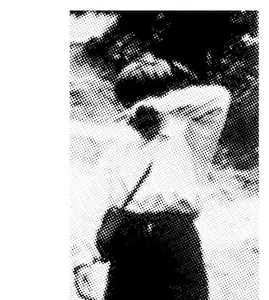


This caught the attention of the ‘clique’ because another picture indicated that the name of one of the Bishops was Andre.

Poor Andre was credited for just two things he managed to do : he founded a secret group of mathematicians, called Nicolas Bourbaki (important because another Bishop’s name was ‘Nico’) and he invented the symbol $\emptyset$ for the empty set (important because TØP used it since the Blurryface-era). I guess most mathematicians will remember Andre Weil for other things.

The clique-consensus seems to be that the girl next to Andre (some even thought it was a boy) is his daughter Sylvie Weil.

If you ever read her novel Chez les Weil you’ll remember that Sylvie did have from a very young age the same exuberant hairstyle as her aunt Simone Weil. So no, she’s definitely not Sylvie.

I’ll save my theory as to where and when this photo was taken, who the girl next to Andre is, and how this picture was used later on in TØP-iconography, for another post.

For now, I just want to point out one tiny detail: the girl is shielding her eyes from the blistering summer-sun, and shadows are falling from right to left.

Got it? Yes: East is up!

The Bourbaki-hype intensified when Tyler Joseph tweeded on August 19th, indicating that a new Album called ‘Trench’ was coming up:

Again, there’s a lot more to say about this tweet, but for now look at the desktop-image. It’s part of one of the most known Bourbaki images of all time (also featuring on their Wikipedia page): the Dieulefit 1938-congress (which we discovered to be taken at Beauvallon).
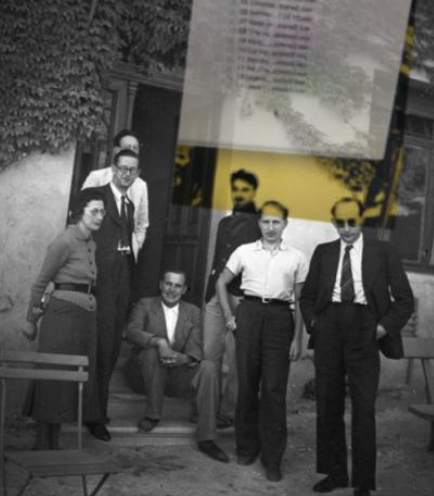
(Left to right: Simone Weil, C. Pisot, Andre Weil, Jean Dieudonne (seated), Claude Chabauty, Charles Ehresmann and Jean Delsarte)

Ah, you spotted it too? We’ll come back to this, and the clique made even more surprising discoveries wrt this picture.

You see, we’ll have a lot of ground to cover, so let’s stick to the “East is up” motto,for now.

Via Google maps you can check that the exit-door in the picture is located to the East side of the main building of the Ecole de Beauvallon.
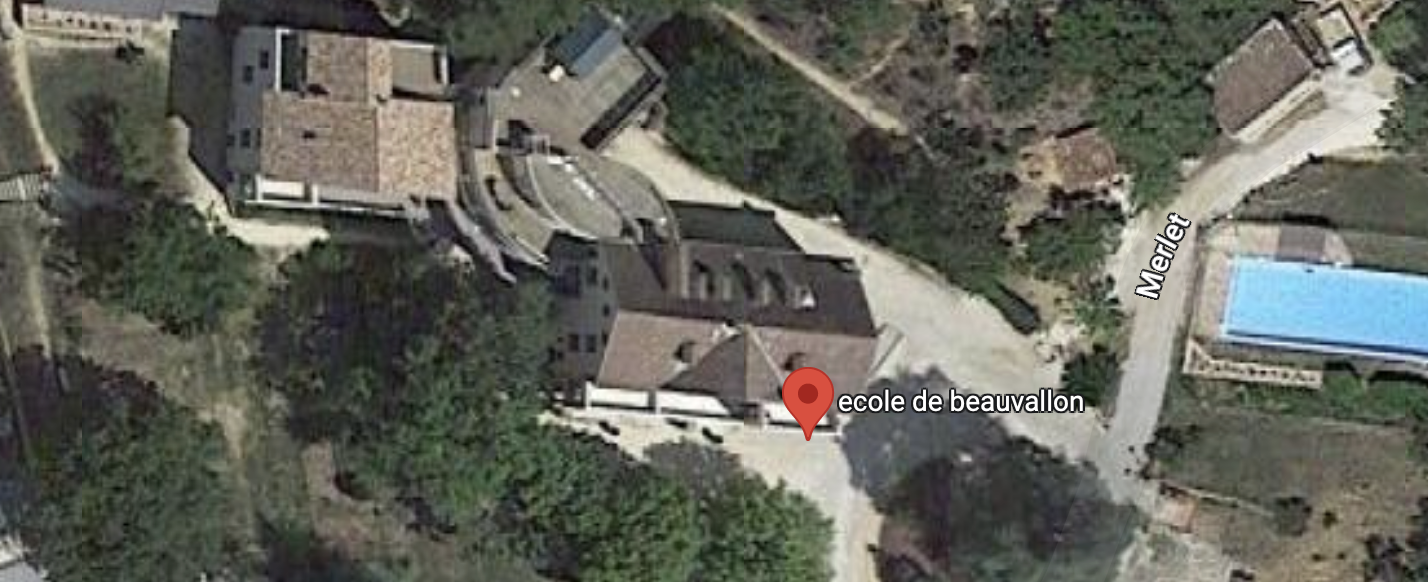
All Bourbakie-congress followers are outside, so does this mean they’ve escaped Dema? Are they now Banditos (whence the Yellow-background-color)?

If you’ve never heard about Banditos or te relevance of the color Yellow, we’ll cover that too.

There’s another ‘East is up’-side to the Beauvallon-story. For this we have to recall some of the history of the spiritual father of the B-gang, General Charles-Denis Bourbaki.


In the Franco-Prussian war of 1870-71, he was given the command of ‘armee de l’Est (yes, the ‘East’-army!), a ramshackle of ill-trained men.

After some initial successes they suffered defeat in the battle of Lizaine and were forced to escape to Switzerland (Yes: East!) where they were disarmed, and treated for their injuries (this was one of the first cases of the International Red Cross, and is remembered in the Bourbaki Panorama in Luzern).

For clique-people: Red cross & Red architecture of the Boubaki-panorama = color of the Bishops.

Anyway, the important fact is that General Bourbaki had to escape to the East.

During the Bourbaki-congress in Beauvallon in 1938 a similar situation occurred. From Andre Weil’s The Apprenticeship of a Mathematician (page 123-124):

In 1938, Bourbaki held a congress in Dieulefit, where Chabauty, who had joined the ranks of the Master’s collaborators, had familie ties. Elie Cartan graciously joined us and took part in some of our discussions.

This was precisely the time of the Munich conference. There were sinister forebodings in the air. We devoured the newspapers and huddled over the radio: this was one Bourbaki congress where hardly any real work was accomplished.

By the time I had resolved that, if war broke out, I would refuse to serve. In the middle of the congress, after confiding in Delsarte, I thought up some pretext or other and left for Switzerland.

But the immediate threat of war soon seemed to have dissipated, so I returned after two days.

So, there’s a remarkable analogy between General Bourbaki’s escape to the East in 1871, and Andre and Simone Weil’s flight to the East at the time of the Munich agreement.

Clearly, the ‘East is up’ mantra is not the only reason why Tyler Joseph used these two Bourbaki-related photos in his narrative, but it illustrates that none of these choices is arbitrary.

I think Tyler knows a lot about Bourbaki. His knowledge about them goes certainly deeper than that of the average clique-member (who state that Bourbaki was a group of mathematicians trying to prove God’s existence, or that there where exactly nine Bourbaki founders, corresponding to the nine Bishops of Dema).

But then, TØP never corrects erroneous clique-statements, every fan-theory is correct to them. In fact, they see the interactions with their fanbase as a collective work in storytelling: they pose a riddle, the clique proposes various possible solutions, and afterwards they may use one of these proposals in their further work.

Here’s an interview making clear that Tyler knows a lot more about Bourbaki than most people (1.50 till 4.40)

Interviewer: “How far are you into a Wikipedia wormhole when you come across this? (the Bourbaki group)”
Tyler: “No, no THEY named their group after Nicolas Bourbaki”
Interviewer: “but there is no Nicolas Bourbaki, right?”
Tyler: They named their group after Blurryface.”
Interviewer: “Even though it was the 1930″s?”
Tyler: “Yeah.”
Interviewer: “So how does it relate?”
Tyler: “its EVERYTHING and at the same time, has nothing to do with it”
Interviewer: “See I’m no good at math, this is difficult for me.”
Tyler: “Math?! *laughs* Math has nothing to do with it… and yet it has everything to do with it.”

Okay, in the next couple of posts I’ll use the little I know about the Bourbaki group trying to make sense of the Trench-era narrative.

In this series:

3 Comments

Bourbaki, Brassens, Hula Hoops and Coconuts

More than ten years ago, when I ran a series of posts on pre-WW2 Bourbaki congresses, I knew most of the existing B-literature. I’m afraid I forgot most of it, thereby missing opportunities to spice up a dull post (such as yesterday’s).

Right now, I need facts about the infamous ACNB and its former connection to Nancy, so I reread Liliane Beaulieu’s Bourbaki a Nancy:

(page 38) : “Like a theatrical canvas, “La Tribu” often carries as its header a subtitle, the product of its editor’s imagination, which brings out the theme of the congress, if necessary. There is thus a “De Nicolaıdes” congress in Nancy, “Du banc public” (reference to Brassens) that of the “Universites cogerees” (in October 68, at the time of co-management).”

The first La Ciotat congress (February 27 to March 6, 1955) was called ‘the congress of the public bench’ (‘banc public’ in French) where Serre and Cartan tried to press Bourbaki to opt for the by now standard approach to varieties (see yesterday), and the following Chicago-congress retaliated by saying that there were also public benches nearby, but of little use.

What I missed was the reference to French singer-songwriter George Brassens. In 1953, he wrote, composed and performed Bancs Public (later called ‘Les Amoureux des bancs publics’).

If you need further evidence (me, I’ll take Liliane’s word on anything B-related), here’s the refrain of the song:

“Les amoureux qui s’bécotent sur les bancs publics,
Bancs publics, bancs publics,
En s’foutant pas mal du regard oblique
Des passants honnêtes,
Les amoureux qui s’bécotent sur les bancs publics,
Bancs publics, bancs publics,
En s’disant des “Je t’aime'” pathétiques,
Ont des p’tits gueules bien sympathiques!”

(G-translated as:
‘Lovers who smooch on public benches,
Public benches, public benches,
By not giving a damn about the sideways gaze
Honest passers-by,
The lovers who smooch on the public benches,
Public benches, public benches,
Saying pathetic “I love you” to each other,
Have very nice little faces!‘)

Compare this to page 3 of the corresponding “La Tribu”:

“Geometrie Algebrique : elle a une guele bien sympathique.”

(Algebraic Geometry : she has a very nice face)

More Bourbaki congresses got their names rather timely.

In the summer of 1959 (from June 25th – July 8th) there was a congress in Pelvout-le-Poet called ‘Congres du cerceau’.

‘Cerceau’ is French for Hula Hoop, whose new plastic version was popularized in 1958 by the Wham-O toy company and became a fad.


(Girl twirling Hula Hoop in 1958 – Wikipedia)

The next summer it was the thing to carry along for children on vacation. From the corresponding “La Tribu” (page 2):

“Le congres fut marque par la presence de nombreux enfants. Les distractions s’en ressentirent : baby-foot, biberon de l’adjudant (tres concurrence par le pastis), jeu de binette et du cerceau (ou faut-il dire ‘binette se jouant du cerceau’?) ; un bal mythique a Vallouise faillit faire passer la mesure.”
(try to G-translate it yourself…)

Here’s another example.

The spring 1949 congress (from April 13th-25th) was held at the Abbey of Royaumont and was called ‘le congres du cocotier’ (the coconut-tree congress).

From the corresponding “La Tribu 18”:

“Having absorbed a tough guinea pig, Bourbaki climbed to the top of the Royaumont coconut tree, and declared, to unanimous applause, that he would only rectify rectifiable curves, that he would treat rational mechanics over the field $\mathbb{Q}$, and, that with a little bit of vaseline and a lot of patience he would end up writing the book on algebraic topology.”

The guinea pig that congress was none other than Jean-Pierre Serre.

A year later (from April 5th-17th 1950) there was another Royaumont-congress called ‘le congres de la revanche du cocotier’ (the congress of the revenge of the coconut-tree).

From the corresponding La Tribu 22:

“The founding members had decided to take a dazzling revenge on the indiscipline young people; mobilising all the magical secrets unveiled to them by the master, they struck down the young people with various ailments; rare were those strong enough to jump over the streams of Royaumont.”

Here’s what Maurice Mashaal says about this in ‘Bourbaki – a secret society of mathematicians’ (page 113):

“Another prank among the members was called ‘le cocotier’ (the coconut tree). According to Liliane Beaulieu, this was inspired by a Polynesian custom where an old man climbs a palm tree and holds on tightly while someone shakes the trunk. If he manages to hold on, he remains accepted in the social group. Bourbaki translated this custom as the following: some members would set a mathematical trap for the others. If someone fell for it, they would yell out ‘cocotier’.”

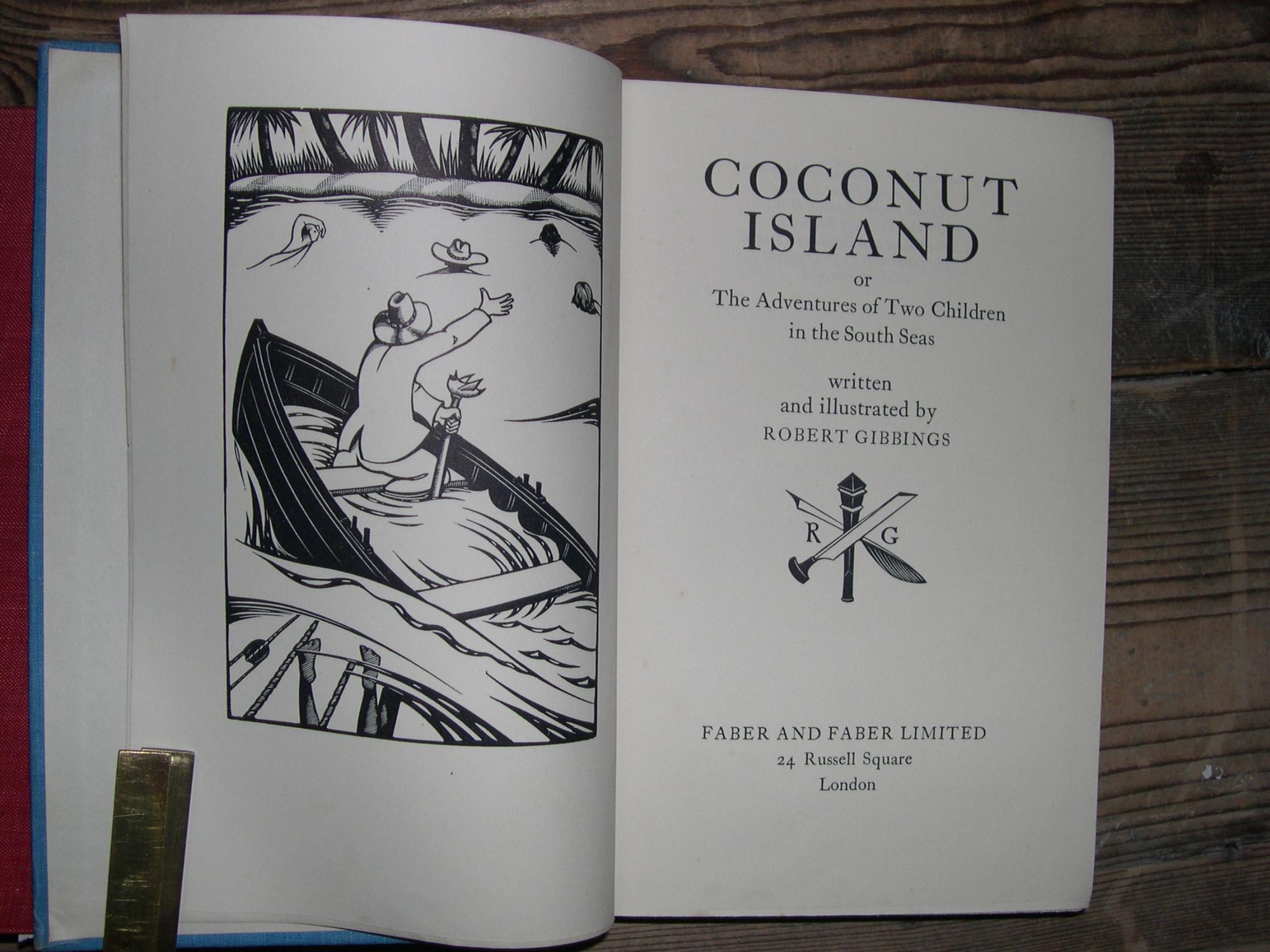
May I be so bold as to suggest that perhaps this sudden interest in Polynesian habits was inspired by the recent release of L’ile aux cocotiers (1949), the French translation of Robert Gibbing’s book Coconut Island?

Leave a Comment

Le Guide Bourbaki : La Ciotat (2)

Rereading the Grothendieck-Serre correspondence I found a letter from Serre to Grothendieck, dated October 22nd 1958, which forces me to retract some claims from the previous La Ciotat post.

Serre writes this ten days after the second La Ciotat-congress (La Tribu 46), held from October 5th-12th 1958:

“The Bourbaki meeting was very pleasant; we all stayed in the home of a man called Guérin (a friend of Schwartz’s – a political one, I think); Guérin himself was in Paris and we had the whole house to ourselves. We worked outside most of the time, the weather was beautiful, we went swimming almost every day; in short, it was one of the best meetings I have ever been to.”

So far so good, we did indeed find Guérin’s property ‘Maison Rustique Olivette’ as the location of Bourbaki’s La Ciotat-congresses. But, Serre was present at both meetings (the earlier one, La Tribu 35, was held from February 27th – March 6th, 1955), so wouldn’t he have mentioned that they returned to that home when both meetings took place there?

From La Tribu 35:

“The Congress was held “chez Patrice”, in La Ciotat, from February 27 to March 6, 1955. Present: Cartan, Dixmier, Koszul, Samuel, Serre, le Tableau (property, fortunately divisible, of Bourbaki).”

In the previous post I mentioned that there was indeed a Hotel-Restaurant “Chez Patrice” in La Ciotat, but mistakingly assumed both meetings took place at Guérin’s property.

Can we locate this place?

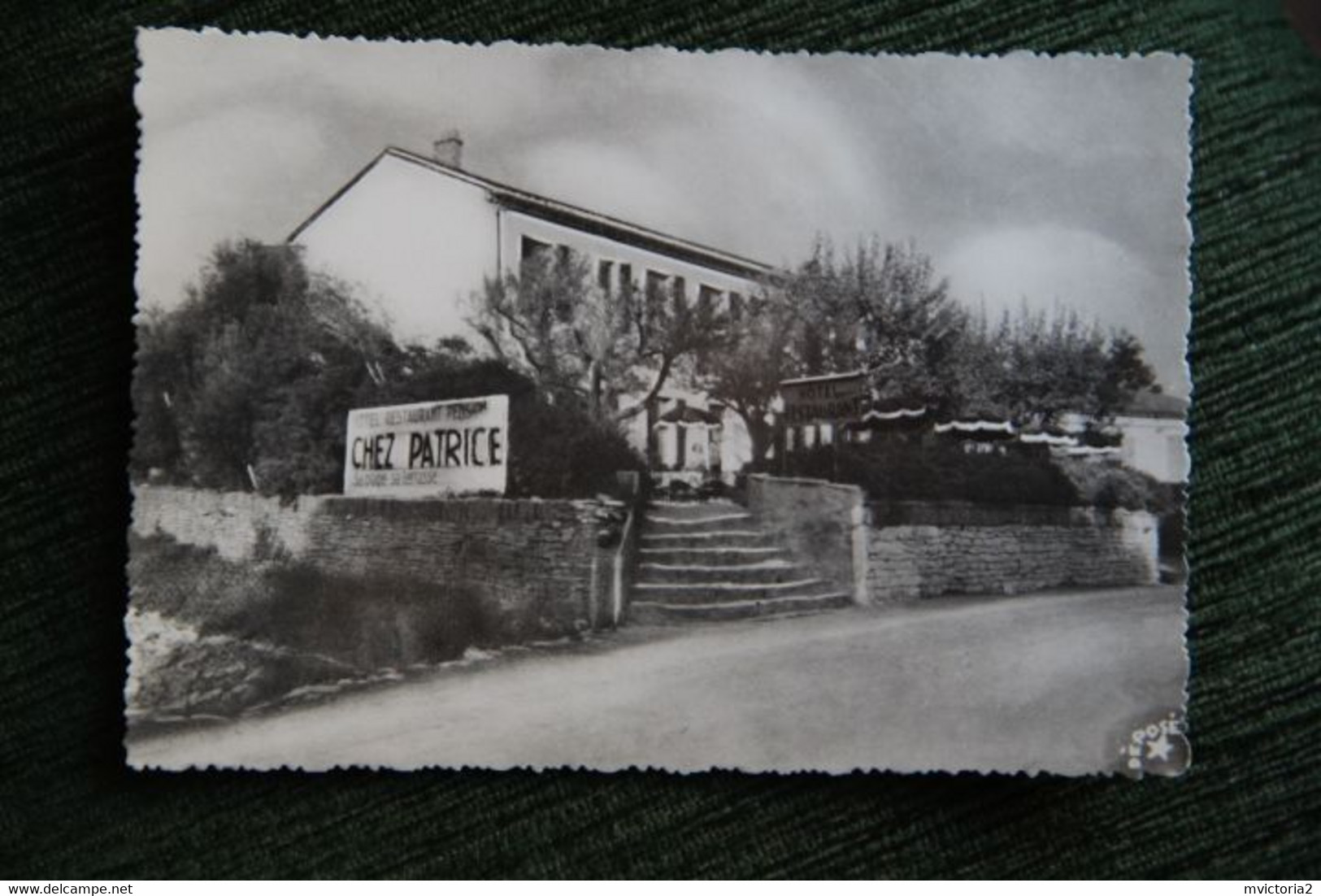
On the backside of this old photograph

we read:

“Chez Patrice”
seul au bord de la mer
Hotel Restaurant tout confort
Spécialités Provençales
Plage privée Parc auto
Ouvert toute l’année
Sur la route de La Ciota-Bandol
Tel 465
La Ciota (B.-d.-R.)

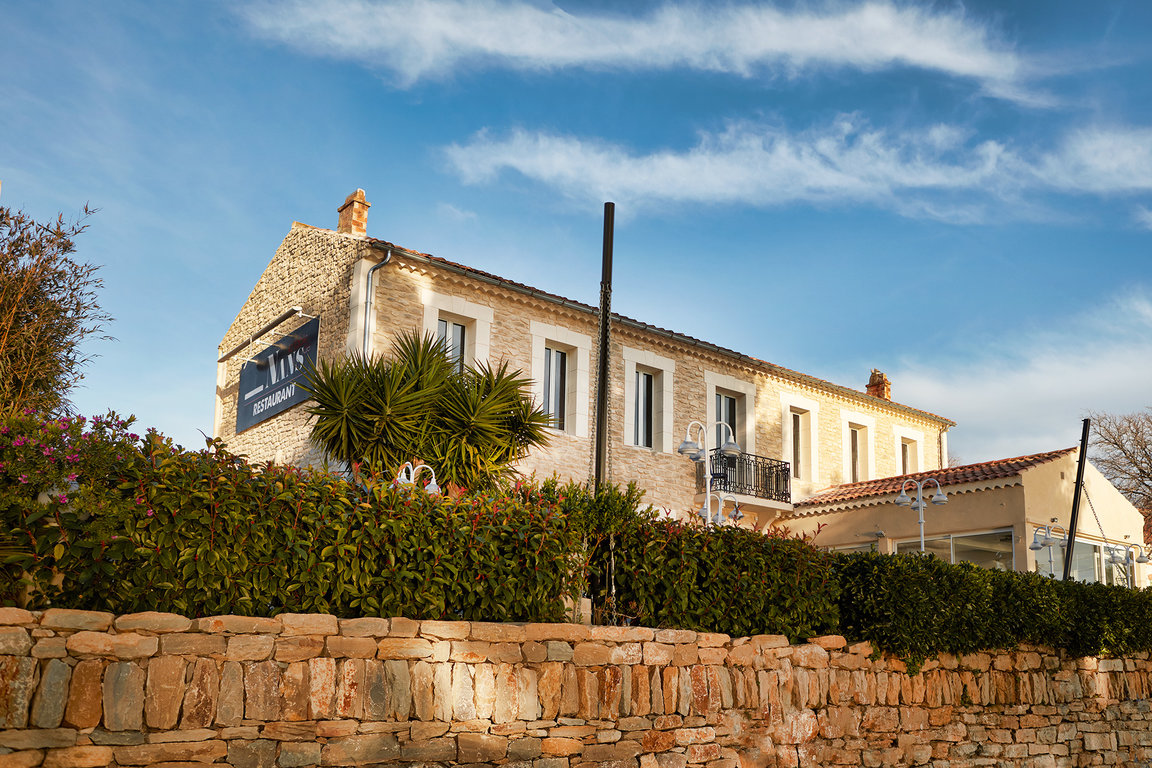
So it must be on the scenic coastal road from La Ciotat to Bandol. My best guess is that “Chez Patrice” is today the one Michelin-star Restaurant “La Table de Nans”, located at 126 Cor du Liouquet, in La Ciotat.

Their website has just this to say about the history of the place:

“Located in an exceptional setting between La Ciotat and Saint Cyr, the building of “l’auberge du Revestel” was restored in 2016.”

And a comment on a website dedicated to the nearby Restaurant Roche Belle confirms that “Chez Patrice”, “l’auberge du Revestel” and “table de Nans” were all at the same place:

“Nous sommes locaux et avons découverts ce restaurant seulement le mois dernier (suite infos copains) alors que j’ai passé une partie de mon enfance et adolescence “chez Patrice” (Revestel puis chez Nans)!!!”

I hope to have it right this time: the first Bourbaki La Ciotat-meeting in 1955 took place “Chez Patrice” whereas the second 1958-congress was held at ‘Maison Rustique Olivette’, the property of Schwartz’s friend Daniel Guérin.

Still, if you compare Serre’s letter to this paragraph from Schwartz’s autobiography, there’s something odd:

“I knew Daniel Guérin very well until his death. Anarchist, close to Trotskyism, he later joined Marceau Prevert’s PSOP. He had the kindness, after the war, to welcome in his property near La Ciotat one of the congresses of the Bourbaki group. He shared, in complete camaraderie, our life and our meals for two weeks. I even went on a moth hunt at his house and caught a death’s-head hawk-moth (Acherontia atropos).”

Schwartz was not present at the second La Ciotat-meeting, and he claims Guérin shared meals with the Bourbakis whereas Serre says he was in Paris and they had the whole house to themselves.

Moral of the story: accounts right after the event (Serre’s letter) are more trustworthy than later recollections (Schwartz’s autobiography).

Dear Collaborators of Nicolas Bourbaki, please make all Bourbaki material (Diktat, La Tribu, versions) publicly available, certainly those documents older than 50 years.

Perhaps you can start by adding the missing numbers 36 and 49 to your La Tribu: 1940-1960 list.

Thank you!

Leave a Comment

Can't find what you're looking for? Try refining your search: