Posts Tagged ‘mac’


the future of this blog (2)

Thursday, August 14th, 2008

Conceptual blog-proposals

  1. bloomsday 2 : BistroMath
  2. the future of this blog
  3. the future of this blog (2)
  4. the future of… (3)

is decided : I’ll keep maintaining this URL until new-year’s eve. At that time I’ll be blogging here for 5 years…

The few encounters I’ve had with architects, taught me this basic lesson of life : the main function of several rooms in a house changes every 5 years (due to children and yourself getting older).

So, from january 1st 2009, I’ll be moving out of here. I will leave the neverendingbooks-site intact for some time to come, so there is no need for you to start archiving it en masse, yet.

Previously I promised to reconsider this blog’s future over a short vacation, but as vacation is looking to be as illusory as the 24-dimensional monster-manifold, I spend my time throwing up ideas into thin and, it seems, extremely virtual air.

Some of you will think this is a gimmick, aiming to attract more comments (there is no post getting more responses than an imminent-end-to-this-blog-post) but then I hope to have settled this already. Neverendingbooks will die on 31st of december 2008. The only remaining issue being : do I keep on blogging or do I look for another time-consumer such as growing tomatoes or, more probably, collecting single malts…

For reasons I’ve stated before, I can see little future in anything but a conceptual-, group- blog. The first part I can deal with, but for the second I’ll be relying on others. So, all I can do is offer formats hoping that some of you are willing to take the jump and try it out together.

Such as in the bloomsday-post where I sketched the BistroMath blog-concept. Perhaps you thought I was just kidding, hoping for people to commit themselves and them calling “Gotcha…”. Believe me, 30 years of doing mathematics have hardwired my brains such that I always genuinely believe in the things I write down at the moment I do (but equally, if someone offers me enough evidence to the contrary, I’ll drop any idea on the spot).

I still think the BistroMath-project has the potential of leading to a bestseller but Ive stated I was not going to pursue the idea if not at least 5 people were willing to join and at least 1 publisher showed an interest. Ironically, I got 2 publishers interested but NO contributors… End of that idea.

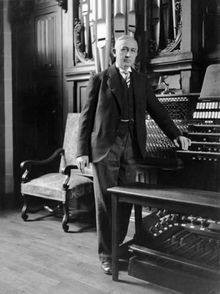
Today I offer another conceptual group-blog : the Noether-boys seminar (with tagline ; the noncommutative experts’ view on 21st century mathematics). And to make it a bit more concrete Ive even designed a potential home-page :

So, what’s the deal? In the 1930-ties Emmy Noether collected around her in Goettingen an exceptionally strong group of students and collaborators (among them : Deuring, Fitting, Levitski, Schilling, Tsen, Weber, Witt, VanderWaerden, Brauer, Artin, Hasse, MacLane, Bernays, Tausky, Alexandrov… to name a few).

Collectively, they were know as the “Noether-boys” (or “Noether-Knaben” or “Trabanten” in German) and combined seminar with a hike to the nearby hills or late-night-overs at Emmy’s apartment. (Btw. there’s nothing sexist about Noether-boys. When she had to leave Germany for Bryn Mawr College, she replaced her boys to form a group of Noether-girls, and even in Goettingen there were several women in the crowd).

They were the first generation of mathematicians going noncommutative and had to struggle a bit to get their ideas accepted. I’d like to know what they might think about the current state of mathematics in which noncommutativity seems to be generally accepted, even demanded if you want to act fashionable.

I’m certain half of the time they would curse intensely, and utter something like ’steht shon alles bei Frau Noether…’ (as Witt is witnessed to have done at least once), and about half the time they might get genuinely interested, and be willing to try and explain the events leading up to this to their fellow “Trabanten”. Either way, it would provide excellent blog-posts.

So I’m looking for people willing to borrow the identity of one of the Noether-boys or -girls. That is, you have to be somewhat related to their research and history to offer a plausible reaction to recent results in either noncommutative algebra, noncommutative geometry or physics. Assuming their identity you will then blog to express your (that is, ‘their’) opinion and interact with your fellow Trabanten as might have been the case in the old days…

I’d like to keep Emmy Noether for the admin-role of the blog but all other characters are free at this moment (except I’m hoping that no-one will choose my favourite role, which is probably the least expected of them anyway).

So please, if you think this concept might lead to interesting blogging, contact me! If I don’t get any positives in this case either, I might think about yet another concept (or instead may give up entirely).

sporadic simple games

Sunday, July 13th, 2008

About a year ago I did a series of posts on games associated to the Mathieu sporadic group M_{12}, starting with a post on Conway’s puzzle M(13), and, continuing with a discussion of mathematical blackjack. The idea at the time was to write a book for a general audience, as discussed at the start of the M(13)-post, ending with a series of new challenging mathematical games. I asked : “What kind of puzzles should we promote for mathematical thinking to have a fighting chance to survive in the near future?”

Now, Scientific American has (no doubt independently) taken up this lead. Their July 2008 issue features the article Rubik’s Cube Inspired Puzzles Demonstrate Math’s “Simple Groups” written by Igor Kriz and Paul Siegel.

By far the nicest thing about this article is that it comes with three online games based on the sporadic simple groups, the Mathieu groups M_{12}, M_{24} and the Conway group .0.

the M(12) game

Scrambles to an arbitrary permutation in M_{12} and need to use the two generators INVERT=(1,12)(2,11)(3,10)(4,9)(5,8)(6,7) and MERGE=(2,12,7,4,11,6,10,8,9,5,3) to return to starting position.

Here is the help-screen :

They promise the solution by july 27th, but a few-line GAP-program cracks the puzzle instantly.

the M(24) game

Similar in nature, again using two generators of M_{24}. GAP-solution as before.

This time, they offer this help-screen :

the .0 game

Their most original game is based on Conway’s .0 (dotto) group. Unfortunately, they offer only a Windows-executable version, so I had to install Bootcamp and struggle a bit with taking screenshots on a MacBook to show you the game’s starting position :

Dotto:

Dotto, our final puzzle, represents the Conway group Co0, published in 1968 by mathematician John H. Conway of Princeton University. Co0 contains the sporadic simple group Co1 and has exactly twice as many members as Co1. Conway is too modest to name Co0 after himself, so he denotes the group “.0” (hence the pronunciation “dotto”).

In Dotto, there are four moves. This puzzle includes the M24 puzzle. Look at the yellow/blue row in the bottom. This is, in fact, M24, but the numbers are arranged in a row instead of a circle. The R move is the “circle rotation to the right”: the column above the number 0 stays put, but the column above the number 1 moves to the column over the number 2 etc. up to the column over the number 23, which moves to the column over the number 1. You may also click on a column number and then on another column number in the bottom row, and the “circle rotation” moving the first column to the second occurs. The M move is the switch, in each group of 4 columns separated by vertical lines (called tetrads) the “yellow” columns switch and the “blue” columns switch. The sign change move (S) changes signs of the first 8 columns (first two tetrads). The tetrad move (T) is the most complicated: Subtract in each row from each tetrad 1/2 times the sum of the numbers in that tetrad. Then in addition to that, reverse the signs of the columns in the first tetrad.

Strategy hints: Notice that the sum of squares of the numbers in each row doesn’t change. (This sum of squares is 64 in the first row, 32 in every other row.) If you manage to get an “8″in the first row, you have almost reduced the game to M24 except those signs. To have the original position, signs of all numbers on the diagonal must be +. Hint on signs: if the only thing wrong are signs on the diagonal, and only 8 signs are wrong, those 8 columns can be moved to the first 8 columns by using only the M24 moves (M,R).

wankers

Thursday, April 10th, 2008

You may not have noticed, but I’m in a foul mood for weeks now because of comments and reactions to the last line of the post on Finding Moonshine. I wrote

Du Sautoy is a softy! I’d throw such students out of the window…

and got everyone against me for this (first floor) defenestration threat…

That’s OK! I sometimes post what’s on my mind and if you don’t like it you are free to leave a comment, and, usually I won’t even bother to reply to it. But occasionally, stuff is bottling up un-healthily.

So, I thought it was a good idea to have a prolonged easter-vacation, somewhere in the south of France. The weather, food, rest, drinks, company and all that were just gorgeous

but …

A quick recap. Here’s the relevant section in duSautoy’s book again :

One of my graduate students has just left my office. He’s done some great work over the past three years and is starting to write up his doctorate, but he’s just confessed that he’s not sure that he wants to be a mathematician. I’m feeling quite sobered by this news. My graduate students are like my children. They are the future of the subject. Who’s going to read all the details of my papers if not my mathematical offspring? The subject feels so tribal that anyone who says they want out is almost a threat to everything the tribe stands for.
Anton has been working on a project very close to my current problem. There’s no denying that one can feel quite disillusioned by not finding a way into a problem. Last year one of my post-docs left for the City after attempting to scale this mountain with me. I’d already rescued him from being dragged off to the City once before. But after battling with our problem and seeing it become more and more complex, he felt that he wasn’t really cut out for it.
What is unsettling for me is that they both questioned the importance of what we are doing. They’ve asked that ‘What’s it all for?’ question, and think they’ve seen the Emperor without any clothes.
Anton has questioned whether the problems we are working on are really important. I’ve explained why I think these are fundamental questions about basic objects in nature, but I can see that he isn’t convinced. I feel I am having to defend my whole existence. I’ve arranged for him to join me at a conference in Israel later this month, and I hope that seeing the rest of the tribe enthused and excited about these problems will re-inspire him. It will also show him that people are interested in what he is dedicating his time to.

For starters, I’m getting old so I’m from those long-forgotten days when you had to do a Ph.D. to prove that you could conduct research independently.

A fortiori this meant that the topic of your thesis was your own choice and interest. The role of your Ph.D. advisor was to get you going and, occasionally, to warn you when you were straying too far afield but that was it.

You, and only you, were responsible to get the thesis finished and defended.

Today, the Ph.D. is just another item on the market to be consumed.

Graduate students shop around looking for the advisor having the best sales-pitch, offers the best deal and, if possibly, the best after-phd service aka the promise of an academic career.

Topic and main outline of the proofs are provided by the advisor and an exceptionally good student today means that (s)he proved a few results along the way on her/his own.

University policy and the promotion-rat-race appear to make the Ph.D. more important to the advisor than to the defendent.

Independence of research today means that after your PhD is obtained, you ditch your advisor and try to get into the slipstream of another more powerful guru, having better after-phd service prospects…

For those who stick with their old advisor, the moment of truth comes when they fail to get a renewal of their grant or a permanent position.

At that time one can hear complaints such as : “That persons’ student got ranked ahead of me and I always thought you were better than that person?” or “The better ranked people for the position are all doing that topic instead of ‘ours’, so I guess your topic isn’t so important after all!”. duSautoy’s captures it all in this one key sentence :

They’ve asked that ‘What’s it all for?’ question, and think they’ve seen the Emperor without any clothes.

As if, failing to get a permanent position is the advisors fault, more than yours…

Just for once, try to be honest to yourself : count the number of hours a day your brain-power gets you over 120 IQ. Substract from this the number of hours a day lost surfing the web idly, trying to read unreadable hep-th papers, socializing, kissing asses, socializing, doing fun things with you fellow graduate students, socializing, working on a relation, chatting, texing, emailing insults but softening it all with a closing smily :) , socializing, etc… (you know the daily-drill of a 20-30-something phd-student a lot better than I do)

I’ll be damned if you get a positive outcome. But if you do, I’ll be happy to take you on as a PhD student…

Well, it’s no threat, it’s a promise : the first ex-student who gets me into a ‘why was it all good for?’ discussion will experience first floor defenestration! (provided I’ll get my window open in time)

And, to soften it all, I’ll add the obligatory :)

the King’s problem on MUBs

Thursday, February 28th, 2008

MUBs (for Mutually Unbiased Bases) are quite popular at the moment. Kea is running a mini-series Mutual Unbias as is Carl Brannen. Further, the Perimeter Institute has a good website for its seminars where they offer streaming video (I like their MacromediaFlash format giving video and slides/blackboard shots simultaneously, in distinct windows) including a talk on MUBs (as well as an old talk by Wootters).

So what are MUBs to mathematicians? Recall that a d-state quantum system is just the vectorspace \mathbb{C}^d equipped with the usual Hermitian inproduct \vec{v}.\vec{w} = \sum \overline{v_i} w_i. An observable E is a choice of orthonormal basis \{ \vec{e_i} \} consisting of eigenvectors of the self-adjoint matrix E. E together with another observable F (with orthonormal basis \{ \vec{f_j} \}) are said to be mutally unbiased if the norms of all inproducts \vec{f_j}.\vec{e_i} are equal to 1/\sqrt{d}. This definition extends to a collection of pairwise mutually unbiased observables. In a d-state quantum system there can be at most d+1 mutually unbiased bases and such a collection of observables is then called a MUB of the system. Using properties of finite fields one has shown that MUBs exists whenever d is a prime-power. On the other hand, existence of a MUB for d=6 still seems to be open…

The King’s Problem1 is the following : A physicist is trapped on an island ruled by a mean king who promises to set her free if she can give him the answer to the following puzzle. The physicist is asked to prepare a d−state quantum system in any state of her choosing and give it to the king, who measures one of several mutually unbiased observables on it. Following this, the physicist is allowed to make a control measurement on the system, as well as any other systems it may have been coupled to in the preparation phase. The king then reveals which observable he measured and the physicist is required to predict correctly all the eigenvalues he found.

The Solution to the King’s problem in prime power dimension by P. K. Aravind, say for d=p^k, consists in taking a system of k object qupits (when p=2l+1 one qupit is a spin l particle) which she will give to the King together with k ancilla qupits that she retains in her possession. These 2k qupits are diligently entangled and prepared is a well chosen state. The final step in finding a suitable state is the solution to a pure combinatorial problem :

She must use the numbers 1 to d to form d^2 ordered sets of d+1 numbers each, with repetitions of numbers within a set allowed, such that any two sets have exactly one identical number in the same place in both. Here’s an example of 16 such strings for d=4 :

11432, 12341, 13214, 14123, 21324, 22413, 23142, 24231, 31243, 32134, 33421, 34312, 41111, 42222, 43333, 44444

Here again, finite fields are used in the solution. When d=p^k, identify the elements of \mathbb{F}_{p^k} with the numbers from 1 to d in some fixed way. Then, the d^2 of number-strings are found as follows : let k_0,k_1 \in \mathbb{F}_{p^k} and take as the first 2 numbers the ones corresponding to these field-elements. The remaning d-2 numbers in the string are those corresponding to the field element k_m (with 2 \leq m \leq d) determined from k_0,k_1 by the equation

k_m = l_{m} * k_0+k_1

where l_i is the field-element corresponding to the integer i (l_1 corresponds to the zero element). It is easy to see that these d^2 strings satisfy the conditions of the combinatorial problem. Indeed, any two of its digits determine k_0,k_1 (and hence the whole string) as it follows from k_m = l_m k_0 + k_1 and k_r = l_r k_0 + k_1 that k_0 = \frac{k_m-k_r}{l_m-l_r}.

In the special case when d=3 (that is, one spin 1 particle is given to the King), we recover the tetracode : the nine codewords

0000, 0+++, 0—, +0+-, ++-0, +-0+, -0-+, -+0-, –+0

encode the strings (with +=1,-=2,0=3)

3333, 3111, 3222, 1312, 1123, 1231, 2321, 2132, 2213

  1. actually a misnomer, it’s more the poor physicists’ problem… []

iTouch as network sniffer

Friday, February 22nd, 2008

In the iTouch warwalking post I was considering trying to gain access to closed networks for innocent purposes such as checking mail, rather than stealing secret passwords from people allowing you free access to their wireless network, but still, I should have thought of the following possibility

Here’s a walk-through :

  • type the following command into your iTouch Terminal.app (assuming you’ve installed the BSD subsystem) :

tcpdump -v -s 65535 -w log.txt

  • once you’ve collected enough packets, cancel the command (ctrl c), AFPd the file from the iTouch to your Mac and open it with Wireshark (this is the most convenient way to install binaries under Leopard as well as an updated version of X11. For other platforms, or source code, see here)

  • do whatever black magic you feel you have to perform using Wireshark (the new name for Ethereal) or other password crackers

AWSOM Powered